Ayurveda, translated for modern life

Abhyanga: The Ayurvedic Oil Massage You Can Do at Home
Abhyanga, the Ayurvedic warm oil self-massage, explained simply: which oil, how often, and what it is actually for.

A simple guide to Abhyanga — what it is, its traditional benefits, which oil to choose, how to do it step by step, and how to make it part of your daily routine.
What Is Abhyanga?
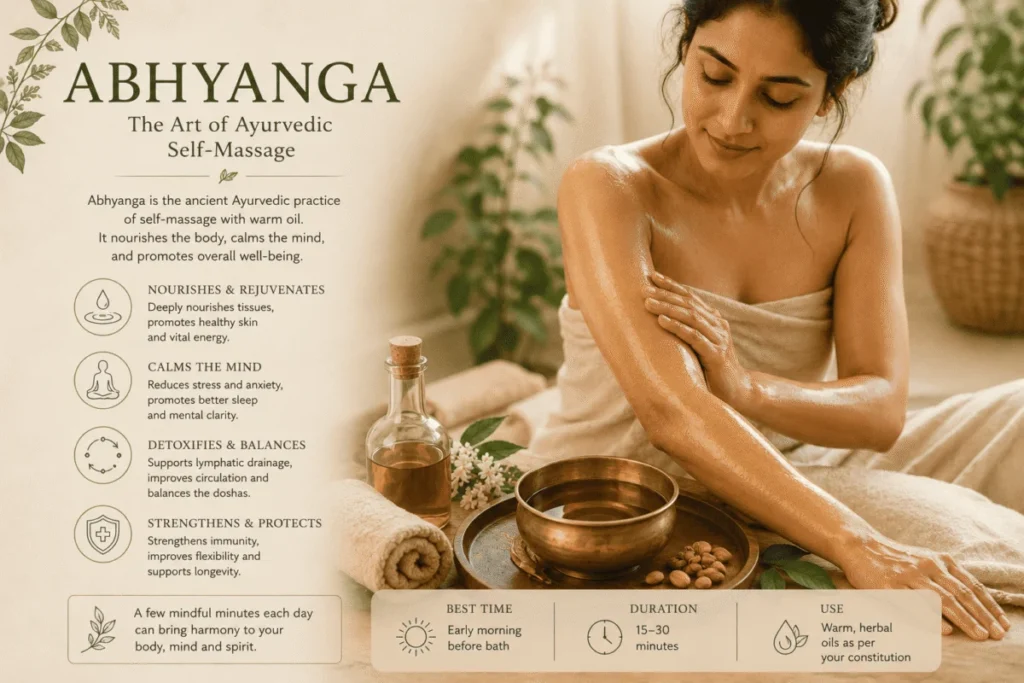
Abhyanga is an Ayurvedic self-massage using oil.
The oil is gently warmed, applied to the body and massaged using smooth strokes.
Unlike a deep-tissue massage, Abhyanga is generally gentle rather than forceful.
The traditional practice focuses on the whole body, including the arms, legs, joints, abdomen, feet and sometimes the head.
In Ayurveda, the choice of oil and routine may be adapted according to your Prakriti, the season and your individual needs.
Why Practise Abhyanga?
Ayurvedic tradition has long associated Abhyanga with skin nourishment, relaxation and support for overall wellbeing.
From a modern perspective, massage can also provide a relaxing sensory experience, although scientific evidence varies depending on the specific health outcome being studied.
Here are some of the practical reasons people enjoy Abhyanga:
1. It nourishes dry skin
Oil creates a protective layer over the skin and can help reduce moisture loss.
This can be especially comforting when your skin feels dry or rough.
2. It can help you relax
The slow, repetitive movements of self-massage can turn your routine into a quiet moment of relaxation.
Instead of rushing through your morning, you spend a few minutes paying attention to your body.
3. It encourages body awareness
When you massage yourself, you naturally become more aware of how different parts of your body feel.
You may notice areas of tightness, dryness or tiredness that you normally overlook.
4. It can become a calming bedtime ritual
Some people enjoy practising gentle oil massage in the evening because it creates a relaxing transition between the day’s activities and bedtime.
5. It makes self-care simple
You don’t need a spa appointment or expensive equipment.
All you really need is:
oil + 10–15 minutes + a comfortable space.
Which Oil Should You Use?
This is one of the most common questions about Abhyanga.
Ayurveda traditionally recommends different oils according to constitution and circumstances. There is no single oil that is automatically best for everyone.
Here is a simple traditional starting point:
| Prakriti | Common traditional oil | Why it is traditionally chosen |
|---|---|---|
| Vata | Sesame oil | Warm and nourishing |
| Pitta | Coconut oil | Cooling and soothing |
| Kapha | Mustard oil | Warming and stimulating |
These are traditional Ayurvedic guidelines, not medical prescriptions.
Your skin type, climate, season and personal preference also matter.
Sesame Oil
Sesame oil is one of the most traditional choices for Abhyanga.
It is particularly popular during cooler or drier seasons and is traditionally associated with Vata-balancing routines.
Coconut Oil
Coconut oil has a lighter, cooling quality and is traditionally preferred for Pitta-oriented routines and warmer climates.
Mustard Oil
Mustard oil is traditionally considered warming and is often associated with Kapha-oriented routines and colder weather.
However, mustard oil can irritate sensitive skin, so patch-testing is important.
Not Sure About Your Prakriti?
Ayurveda considers Prakriti — your individual constitution — when creating personalised routines.
It is traditionally described through the three doshas:
Vata • Pitta • Kapha
If you’re curious about your Ayurvedic constitution, you can explore the Ananta Harmony Prakriti Assessment
Think of it as a tool for Ayurvedic self-awareness, not a medical diagnosis.
How to Do Abhyanga at Home
You don’t need to be an Ayurvedic expert.
Follow these simple steps.
Step 1: Choose Your Oil
Start with a small amount of sesame or coconut oil, depending on your preference, skin and climate.
If you are using a new oil, test a small amount on your skin first.
Step 2: Warm the Oil
Place a small amount of oil in a clean bowl.
Warm it gently using indirect heat.
The oil should be comfortably warm — never hot.
You only need enough oil to create a thin, comfortable layer over your skin.
Step 3: Start With Your Arms
Apply the oil to your arms.
Use:
Long strokes on the arms.
Move from the hands toward the shoulders and back down again.
Keep your pressure gentle.
Step 4: Massage Your Joints
When you reach the joints — wrists, elbows, knees and ankles — use small circular movements.
There is no need to press deeply.
The purpose is gentle oil massage, not deep-tissue work.
Step 5: Massage Your Legs
Use long, smooth strokes along the thighs, calves and shins.
Spend a little extra time on areas that feel dry or tired.
Step 6: Massage Your Abdomen
Place your hands gently over your abdomen.
Use slow, comfortable circular movements.
Do not press deeply or massage an area that is painful.
Step 7: Massage Your Chest and Shoulders
Use gentle strokes over the upper chest and shoulders.
If you carry tension in your shoulders, spend a little extra time here — but avoid forceful pressure.
Step 8: Don’t Forget Your Feet
Your feet are one of the simplest places to massage.
Apply a small amount of oil and gently massage:
- The soles
- The heels
- Between the toes
- Around the ankles
This can be particularly relaxing as part of an evening routine.
Step 9: Let the Oil Sit Briefly
Once you’ve finished, allow the oil to remain on your skin for a short period before bathing.
You don’t need to leave it on for hours.
For a practical home routine, 10–15 minutes is enough.
Step 10: Take a Warm Shower
Take a comfortably warm shower to remove the excess oil.
Be careful when stepping into the shower because oil can make the floor slippery.
That’s it.
Your Abhyanga is complete.
How Long Does Abhyanga Take?
You don’t need an hour.
A simple routine can take:
5 minutes — quick version
10–15 minutes — comfortable everyday routine
20+ minutes — slower, more complete practice
If you’re new to Abhyanga, start with 5–10 minutes.
A short routine that you actually follow is better than a perfect routine that you never have time to do.
When Is the Best Time to Do Abhyanga?
Traditionally, Abhyanga is commonly practised before bathing, often as part of a morning routine.
A simple morning routine could look like:
Wake up → Abhyanga → Shower → Get ready → Breakfast
But you don’t have to force yourself into a particular schedule.
If an evening routine works better for you, you can use Abhyanga as a relaxing transition before your nighttime routine.
The best time is the time you can follow consistently.
How Often Should You Do It?
If you’re new to Abhyanga, don’t feel that you need to practise it every day.
Start with:
1–2 times a week.
If you enjoy it and your skin responds well, you can gradually make it more frequent.
Traditional Ayurvedic practice may recommend regular or daily Abhyanga, but your routine should be practical for your lifestyle.
A Simple 10-Minute Abhyanga Routine
If you are short on time, try this:
Minute 1: Warm and apply the oil
Minutes 2–3: Arms and hands
Minutes 4–5: Legs
Minute 6: Joints
Minute 7: Abdomen
Minute 8: Shoulders and chest
Minutes 9–10: Feet
Then shower.
Ten minutes can be enough to turn an ordinary morning into a mindful ritual.
What Abhyanga Is NOT
There are many exaggerated claims about Ayurvedic oil massage online.
Abhyanga should not be presented as a cure for diseases or as a replacement for medical treatment.
It is better understood as a traditional wellness and self-care practice.
Modern massage research suggests potential benefits for some types of pain and relaxation, but the strength of evidence varies and massage is not a treatment for every condition.
When Should You Avoid Abhyanga?
Do not massage over:
- Open wounds
- Broken skin
- Active skin infections
- Significant rashes
- Fresh injuries
- Areas that are painful or swollen without a known cause
Avoid forceful massage if you have a condition that increases the risk of bleeding or injury.
If you are pregnant, have a medical condition, take blood-thinning medication or are unsure whether massage is appropriate for you, speak with your healthcare professional first. Some people may need to modify or avoid massage depending on their health circumstances.
And if you have persistent pain or another concerning symptom, don’t use Abhyanga to delay getting medical advice.
The Most Important Part: Listen to Your Body
There is no prize for using more oil.
There is no benefit to pressing harder.
And there is no need to follow a complicated routine.
Your Abhyanga should feel:
Warm.
Gentle.
Comfortable.
Relaxing.
If something feels painful, stop.
If an oil irritates your skin, wash it off and choose another option.
Your body is the best place to begin.
The Ananta Harmony Way
Abhyanga is a beautiful example of how an ancient Ayurvedic practice can fit into modern life.
You don’t need to completely change your routine.
You don’t need expensive products.
You don’t need an elaborate ritual.
Start with one oil.
Give yourself ten minutes.
Massage gently.
Breathe.
Notice how your body feels.
Then step into a warm shower and begin your day.
Wellness doesn’t always come from doing more.
Sometimes, it comes from slowing down enough to care for yourself.
Ananta Harmony
Balance. Heal. Thrive.