Ayurveda, translated for modern life

Why Do You Bloat After Every Meal? 4 Ayurvedic Reasons to Consider
Bloating after every meal is common but not inevitable. Four Ayurvedic reasons it happens, and what to try first.

Bloating after eating is common—but if your stomach feels heavy, tight or uncomfortably full after almost every meal, it may be time to look beyond the food on your plate.
You finish lunch and suddenly your waistband feels tighter.
You feel heavy. Your abdomen feels full. Maybe there is gas, belching or discomfort.
Then it happens again after dinner.
Sound familiar?
Bloating can have many causes, including swallowed air, certain carbohydrates, constipation, food intolerances and digestive conditions such as IBS.
Ayurveda approaches digestion differently. Rather than focusing only on what you eat, it also asks:
How are you eating? How well are you digesting? And what is your daily rhythm like?
Here are four Ayurvedic concepts worth understanding.

1. Your Digestive Fire — Agni — May Be Disturbed
In Ayurveda, Agni refers broadly to the body’s digestive and metabolic processes. Ayurvedic tradition considers balanced Agni important for proper digestion.
When digestion feels sluggish, you may notice:
- Heaviness after meals
- Feeling overly full
- Gas or bloating
- Reduced appetite
- Indigestion
This doesn’t mean every episode of bloating is caused by “weak Agni.” Modern medicine recognises many different causes of bloating, so persistent symptoms shouldn’t be self-diagnosed through Ayurveda alone.
Try this:
Instead of constantly adding digestive supplements, start with the basics:
Eat slowly. Sit down to eat. Chew thoroughly. Avoid rushing through meals.
These simple habits can also reduce swallowed air, which can contribute to gas and bloating.
2. Irregular Eating May Not Suit Your Digestion
One day you skip breakfast.
The next day you eat a huge lunch.
Then dinner happens late because work ran over.
Modern life makes irregular eating easy.
Ayurveda places considerable importance on regular routines, including regularity around meals.
A practical approach is to create some consistency:
Breakfast → Lunch → Dinner
rather than constantly eating at completely different times.
This doesn’t mean everyone needs to eat at identical hours. Your schedule, hunger and individual needs matter.
3. Vata and the Experience of Gas & Bloating
Ayurveda associates Vata with movement and the qualities of air and space. When Vata is disturbed, digestive complaints such as gas and abdominal discomfort are traditionally discussed.
This is particularly relevant when bloating is accompanied by:
- Gas
- Abdominal rumbling
- Constipation
- Irregular appetite
- A feeling of movement or discomfort in the abdomen
Ayurveda’s approach is not simply “eat less.”
It often emphasises warmth, regularity and simplicity in the daily routine.
A gentle place to start:
Choose more freshly prepared, comfortably warm meals when they suit you, eat without rushing and maintain a regular routine.
4. Ama — The Ayurvedic Concept of Incomplete Digestion
One of Ayurveda’s best-known digestive concepts is Ama.
CCRAS describes Ama within Ayurvedic theory as material associated with improperly digested food and impaired digestion/metabolism.
In traditional Ayurvedic thinking, repeatedly eating in a way that overwhelms digestion may contribute to digestive imbalance.
But there’s an important distinction:
Ama is an Ayurvedic concept. It should not be presented as a scientifically established “toxin” that modern medicine has identified as the cause of bloating.
This distinction matters if we want to talk about Ayurveda responsibly.
But What If You Really Bloat After Every Meal?
This is where you shouldn’t simply blame your “dosha.”
Repeated bloating can sometimes be related to:
- Food intolerances
- Constipation
- IBS
- Lactose intolerance
- Certain fermentable carbohydrates
- Indigestion
- Other digestive conditions
For example, lactose intolerance can cause bloating, gas, abdominal pain and diarrhoea after consuming lactose-containing foods.
Certain carbohydrates can also produce more gas when they aren’t fully digested and are subsequently broken down by bacteria in the large intestine.
So instead of eliminating ten foods at once, start observing patterns.
Try a 7-Day Bloating Journal
For one week, record:
What you ate
↓
What time you ate
↓
How quickly you ate
↓
How you felt 1–3 hours later
↓
Bloating / gas / bowel movement / discomfort
You may start noticing patterns.
Perhaps dairy triggers symptoms.
Perhaps very large meals do.
Perhaps eating quickly makes things worse.
Or perhaps there is no obvious food trigger—which is itself useful information.
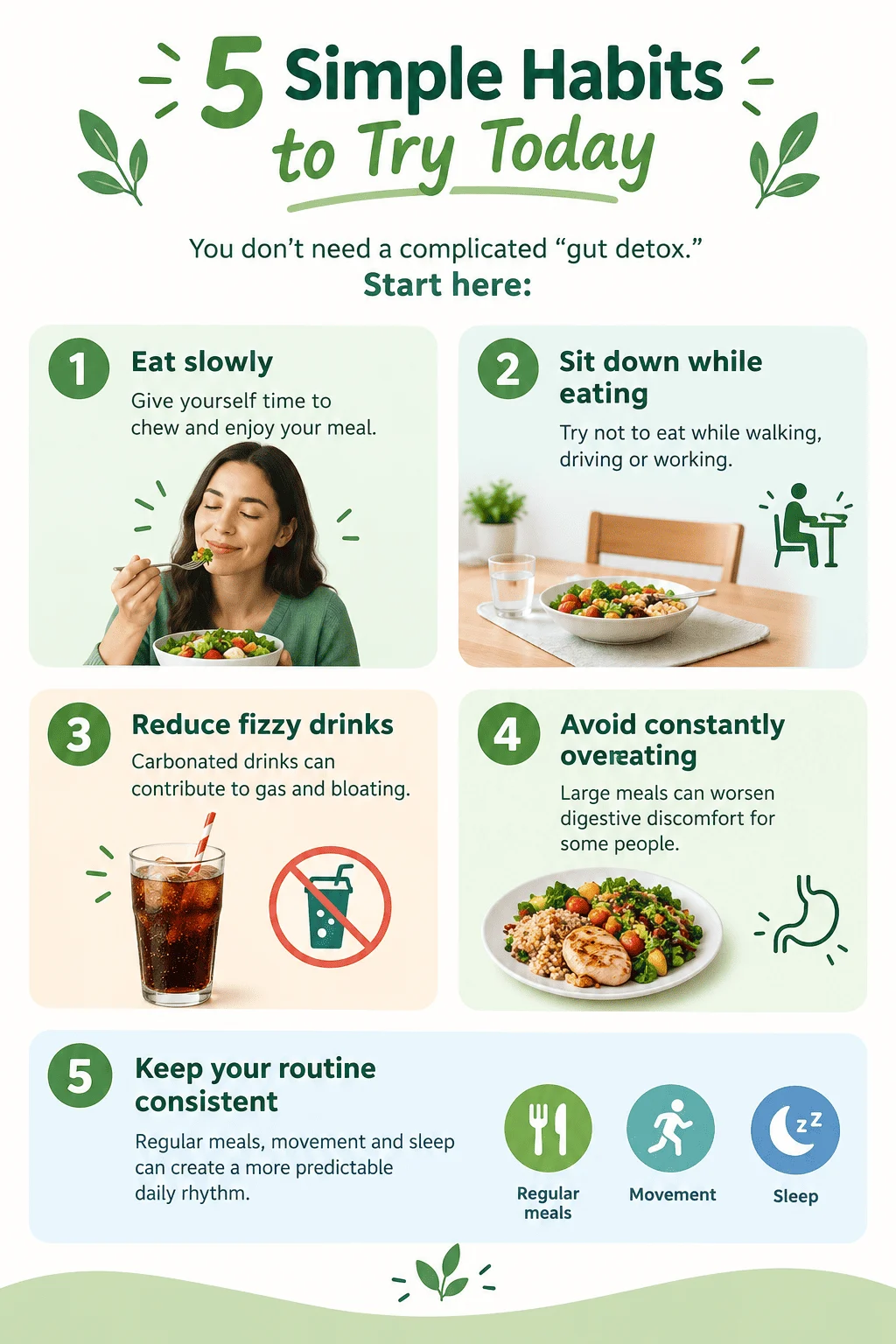
5 Simple Habits to Try Today
You don’t need a complicated “gut detox.”
Start here:
🌿 Eat slowly
Give yourself time to chew and enjoy your meal.
🌿 Sit down while eating
Try not to eat while walking, driving or working.
🌿 Reduce fizzy drinks
Carbonated drinks can contribute to gas and bloating.
🌿 Avoid constantly overeating
Large meals can worsen digestive discomfort for some people.
🌿 Keep your routine consistent
Regular meals, movement and sleep can create a more predictable daily rhythm.
Ayurveda Starts With the Individual
There is no single “anti-bloating diet” that works for everyone.
Ayurveda traditionally considers Prakriti, digestion, lifestyle, season and individual constitution when thinking about food and daily routines.
That’s why two people can eat the same meal and experience it very differently.
If you want to understand your Ayurvedic constitution, explore your Prakriti assessment and use it as a starting point for learning more about your individual tendencies.
When Bloating Shouldn’t Be Ignored
Occasional bloating is common.
But if you are regularly bloated, the symptoms are getting worse, or bloating is affecting your daily life, speak with a healthcare professional. Persistent bloating accompanied by symptoms such as unexplained weight loss, significant pain, constipation or diarrhoea deserves medical evaluation.
Ayurveda can be part of a holistic wellness conversation—but it shouldn’t replace appropriate medical assessment.
The Ananta Harmony Takeaway
Your digestion isn’t only about what you eat.
It’s also about how, when and why you eat.
Slow down.
Create some regularity.
Notice your body’s patterns.
And instead of immediately searching for the next “gut cleanse,” start by understanding your own routine.
Better digestion begins with awareness.
Ananta Harmony
Balance. Heal. Thrive.
Please write in English language.