Ayurveda, translated for modern life

Why Your Gut Is the New Wellness Starting Point
Digestion, mood, energy and more all trace back to the gut. What actually supports it, and what does not.

From digestion to energy, mood and everyday wellbeing, your gut plays a much bigger role in your health than you may realise.
There was a time when gut health simply meant having a comfortable stomach and regular digestion.
Today, we understand that the gut is connected to far more than digestion. The trillions of microorganisms living in our digestive tract interact with our food, immune system and metabolism, while communication between the gut and brain forms an important part of the gut–brain axis.
And Ayurveda has been placing digestion at the centre of wellbeing for centuries.
At Ananta Harmony, we believe wellness begins with the basics: how you eat, how you digest, how you live and how you care for your body every day.
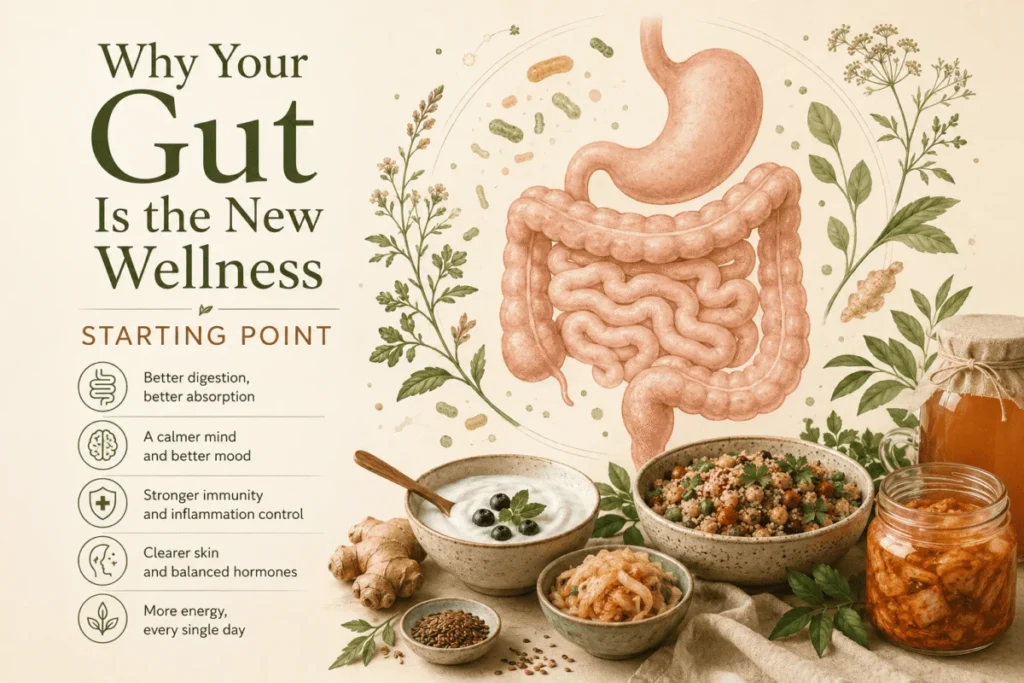
Your digestive system breaks down food so your body can absorb nutrients and use them for energy, growth and repair.
But your gut is also home to a complex microbial community known as the gut microbiome. These microorganisms interact with the intestinal environment and can influence immune function, metabolism and communication with the nervous system.
This is why gut health has become such an important part of modern wellness.
Your gut does not work in isolation. It is part of a larger network connecting digestion, nutrition, immunity, brain function and overall wellbeing.
The gut–brain connection
Have you ever noticed that stress affects your digestion?
Or that when you are anxious, your appetite or bowel habits change?
This isn’t simply in your head.
The gut and brain communicate continuously through the nervous system, hormones and immune signals. This relationship is known as the gut–brain axis.
It is one reason why caring for your digestive health can be part of caring for your overall wellbeing.
What Can Affect Your Gut?
Your digestive health is influenced by many everyday factors, including:
- The variety and quality of foods you eat
- Fibre intake
- Adequate hydration
- Physical activity
- Sleep
- Stress
- Alcohol and tobacco use
- Certain medications
- Your individual health conditions
There is no single “perfect gut diet”.
What supports one person’s digestion may not work exactly the same way for another. This is where a more personalised approach becomes valuable.
Ayurveda and the Importance of Digestion
Long before the modern conversation around the microbiome, Ayurveda placed considerable importance on Agni — the principle of digestive fire.
In Ayurvedic thought, balanced digestion is fundamental to maintaining harmony in the body.
The idea is simple: food is not only about what we consume. How well we digest and assimilate it matters too.
This is why traditional Ayurvedic practices often emphasise:
freshly prepared food, appropriate meal timing, mindful eating, seasonal choices and foods suited to the individual.
Rather than viewing food only through calories or nutrients, Ayurveda encourages us to consider the whole experience of eating.
1. Eat More Variety
Different plant foods provide different types of fibre and compounds that can interact with the gut microbiome.
Instead of focusing on one “superfood”, build variety into your meals.
Think:
dal + vegetables + whole grains + fruits + nuts + seeds + herbs and spices.
Your everyday Indian kitchen already offers incredible diversity.
2. Make Fibre Your Friend
Fibre is found naturally in vegetables, fruits, whole grains, pulses, beans, nuts and seeds.
Increase fibre gradually and drink enough fluids, particularly if your current intake is low.
A colourful, varied plate is often a much better long-term strategy than chasing a single trendy ingredient.
3. Choose Mostly Whole Foods
A diet based largely on minimally processed foods can provide fibre and a wide range of nutrients.
That doesn’t mean you need to eliminate every packaged food.
Instead, ask yourself:
What makes up most of my everyday meals?
Small improvements repeated consistently matter more than perfection.
4. Eat Mindfully
Eating quickly while distracted can make it harder to notice hunger and fullness cues.
Try slowing down.
Sit down for your meal. Reduce distractions. Chew thoroughly. Give yourself time to actually experience your food.
In Ayurveda, the act of eating is considered an important part of digestion — not simply the food itself.
5. Move After Meals
You don’t need an intense workout after eating.
A gentle walk can be an easy way to incorporate movement into your routine.
Even a short walk after a meal can become a valuable daily ritual — especially if your alternative is sitting for hours.
6. Don’t Forget Sleep and Stress
Gut health isn’t only about food.
Poor sleep and ongoing stress can influence appetite, digestion and the gut–brain relationship.
Your wellness routine therefore needs more than a “gut-friendly” breakfast.
It needs rest, movement, nourishment and recovery.
What About Fermented Foods?
Fermented foods such as traditionally prepared curd, buttermilk and certain other fermented foods can be part of a varied diet.
However, there is no need to force yourself to consume a particular fermented product simply because it is trending online.
Your overall dietary pattern matters more than one fashionable food.
Your Gut Doesn’t Need Another Extreme Diet
The wellness world is full of quick fixes:
“Detox your gut.”
“Reset your microbiome.”
“Remove these five foods.”
“Drink this every morning.”
But your digestive system does not need constant resetting.
It needs consistent care.
A sustainable approach is usually much simpler:
Eat a diverse diet.
Prioritise whole foods.
Get enough fibre and fluids.
Move your body.
Sleep well.
Manage stress.
Pay attention to how your body responds.
And when persistent digestive symptoms occur, don’t simply assume that you need a cleanse or supplement. Ongoing symptoms deserve proper medical evaluation